Preprosthetic Surgery
Full Arch Restoration near me
PREPROSTHETIC SURGERY
PREPARE. RESHAPE. RESTORE. BUILDING THE FOUNDATION FOR YOUR BEST SMILE.
A successful denture, partial, or other prosthetic restoration depends on more than just the prosthetic itself. It depends on the oral foundation beneath it. Irregularities in the bone, gum tissue, or ridge can cause prosthetics to fit poorly, shift uncomfortably, and fail to deliver the function and aesthetics they are designed to provide. Preprosthetic surgery prepares your mouth for the best possible prosthetic outcome by surgically reshaping, smoothing, or augmenting the underlying structures. At Saxira Oral Surgery, we offer precise, expert preprosthetic surgical procedures designed to maximize your comfort, fit, and long-term success. Serving patients throughout Clinton, Hyattsville, and the greater Maryland area, our whole-person approach ensures your prosthetic foundation is as strong and stable as what goes on top of it.
Struggling with an ill-fitting prosthetic or preparing for a new one?
WHAT IS PREPROSTHETIC SURGERY?
Preprosthetic surgery encompasses a range of surgical procedures performed before the placement of a dental prosthetic, such as full or partial dentures, to ensure the oral tissues and bony structures provide an ideal foundation. This may involve smoothing or reshaping irregular bone, removing excess or misshapen tissue, correcting ridge deficiencies, or removing bony growths (tori) that interfere with prosthetic fit. The goal is to create a stable, comfortable, and well-contoured oral environment so that your prosthetic device fits properly, functions reliably, and feels natural.
Let’s explore the types of preprosthetic procedures we perform, how to prepare and recover, and why patients throughout Maryland choose Saxira Oral Surgery to lay the
groundwork for their best prosthetic outcomes.
PREPROSTHETIC SURGERY PROCEDURES
ALVEOLOPLASTY (RIDGE RESHAPING)
Surgical smoothing and reshaping of the alveolar bone ridge following tooth extraction or as a standalone procedure to correct irregular, sharp, or undercut bone.
Creates a smooth, even ridge contour that allows a denture or prosthetic to seat evenly, distribute force properly, and remain stable during use.
TORI REMOVAL (TORUS REDUCTION)
Surgical removal of bony growths known as tori, commonly found on the palate (torus palatinus) or on the inner surface of the lower jaw (torus mandibularis), that prevent a prosthetic from fitting correctly.
Performed with precision to eliminate the obstruction and create a flat, prosthetic-compatible surface without compromising surrounding tissue.
SOFT TISSUE RECONTOURING
Surgical correction of excess, flabby, or redundant gum and soft tissue that can cause instability, soreness, or poor retention of a prosthetic.
Reshaping or removing excess tissue ensures a firm, well-contoured mucosal foundation for optimal prosthetic contact and comfort.
FRENECTOMY (FRENUM REMOVAL OR REPOSITIONING)
Removal or repositioning of an oversized or low-attached frenum, the fibrous band connecting the lip or tongue to the gum, that limits prosthetic stability or causes tissue pulling and discomfort.
Improves range of function, prosthetic retention, and comfort for denture wearers.
RIDGE AUGMENTATION FOR PROSTHETIC SUPPORT
Surgical augmentation of a severely atrophied or deficient ridge using bone grafting techniques to rebuild volume and provide an adequate foundation for prosthetic placement.
Extends prosthetic candidacy to patients with significant bone loss and improves long-term comfort and fit for both removable and implant-supported solutions.
HOW TO PREPARE AND RECOVER FROM PREPROSTHETIC SURGERY
Before Your Appointment
- Complete a thorough consultation including clinical exam and digital imaging to assess bone contour, tissue quality, and the specific surgical needs relative to your planned prosthetic.
- Share your full medical history, current medications, and any systemic conditions that may affect healing so we can plan the safest approach.
- Follow pre-operative instructions carefully, including any fasting requirements if sedation is planned.
- Coordinate with your prosthodontist or general dentist in advance so that surgical planning aligns with the specifications of your final prosthetic.
AFTER YOUR PROCEDURE (AFTERCARE)
- Rest for 24 to 48 hours and avoid strenuous activity. Follow all wound care instructions, including gentle rinsing and keeping the area clean.
- Stick to soft foods during initial healing and avoid anything hard, crunchy, or sharp that could irritate or disturb healing tissue.
- Take all prescribed medications as directed and apply ice packs as instructed to manage swelling in the first 24 to 48 hours.
- Attend all follow-up visits to confirm healing, assess tissue maturation, and coordinate the timing of your prosthetic delivery with your dental team.
Our team provides detailed recovery guidance and works closely with your restorative provider to ensure seamless care from surgery to prosthetic delivery.
BENEFITS OF PREPROSTHETIC SURGERY
- Dramatically Improves Prosthetic Fit – A surgically optimized foundation allows dentures and partials to seat correctly, retain firmly, and function reliably.
- Eliminates Pain and Pressure Points – Removing sharp ridges, bony prominences, and excess tissue prevents the sore spots and discomfort that plague poorly fitting prosthetics.
- Enhances Long-Term Stability – Proper ridge contour and tissue health support consistent prosthetic performance over time.
- Improves Chewing, Speech, and Confidence – A well-fitting prosthetic on a prepared foundation functions more like natural teeth, restoring the comfort and confidence you deserve.
- Sets the Stage for Implants – In some cases, preprosthetic procedures also prepare the mouth for eventual implant placement, providing a clear path to long-term restoration.
- Coordinated Care Outcomes – Surgery tailored to the specifications of your planned prosthetic ensures the final result functions exactly as designed.
Reserve your consultation to discuss how preprosthetic surgery can improve the comfort and performance of your prosthetic solution. Individual results vary.
COMMON MYTHS ABOUT PREPROSTHETIC SURGERY
- Myth: Dentures fit fine without any special preparation. Irregularities in bone and tissue are among the most common reasons dentures fit poorly, cause sores, and require constant adjustment. Surgical preparation significantly improves outcomes.
- Myth: Preprosthetic surgery is a major, risky procedure. Most preprosthetic procedures are minor, outpatient surgeries performed under local anesthesia with optional sedation for added comfort.
- Myth: It's easier to just keep adjusting the denture. Repeated adjustments cannot compensate for an uneven foundation. Addressing the underlying tissue and bone provides a stable, lasting solution.
WHO IS A GOOD CANDIDATE FOR PREPROSTHETIC SURGERY?
SURGERY MAY BE RECOMMENDED IF YOU:
- Are planning to receive a new full or partial denture and have irregular, sharp, or deficient ridges
- Currently wear a prosthetic that fits poorly, causes pain, or requires frequent adjustments
- Have bony tori, exostoses, or prominences that interfere with prosthetic placement
- Have excess, flabby, or redundant soft tissue that reduces prosthetic stability
- Have a frenum attachment that limits prosthetic retention or causes tissue discomfort
Reserve a consultation for an expert evaluation and a surgical plan coordinated with your prosthetic goals.
WHY CLIENTS IN CLINTON TRUST SAXIRA ORAL SURGERY
- Coordinated Care Outcomes – Alveoloplasty, tori removal, tissue recontouring, and ridge augmentation performed by providers with advanced training in oral and maxillofacial surgery.
- Coordinated Treatment Planning – We work directly with your restorative dentist or prosthodontist to ensure surgical outcomes align precisely with your prosthetic specifications.
- Minimally Invasive Approach – Precise surgical techniques designed to achieve optimal results with the least disruption to surrounding structures and the shortest recovery time.
- Sedation Options for Comfort – Local anesthesia, nitrous oxide, oral sedation, or IV sedation available to ensure your procedure is as comfortable as possible.
- Long-Term Outcome Focus – We measure success not just by a smooth surgical result, but by how well your prosthetic performs and how comfortable you are for years to come.
WHAT HAPPENS DURING A PREPROSTHETIC SURGERY APPOINTMENT?
YOUR STEP-BY-STEP EXPERIENCE
- Consultation and Imaging – Clinical evaluation and digital imaging to assess ridge contour, tissue quality, and the surgical plan relative to your prosthetic needs.
- Coordinated Treatment Plan – We review the surgical approach, anesthesia options, expected timeline, and recovery plan, and coordinate with your prosthetic provider.
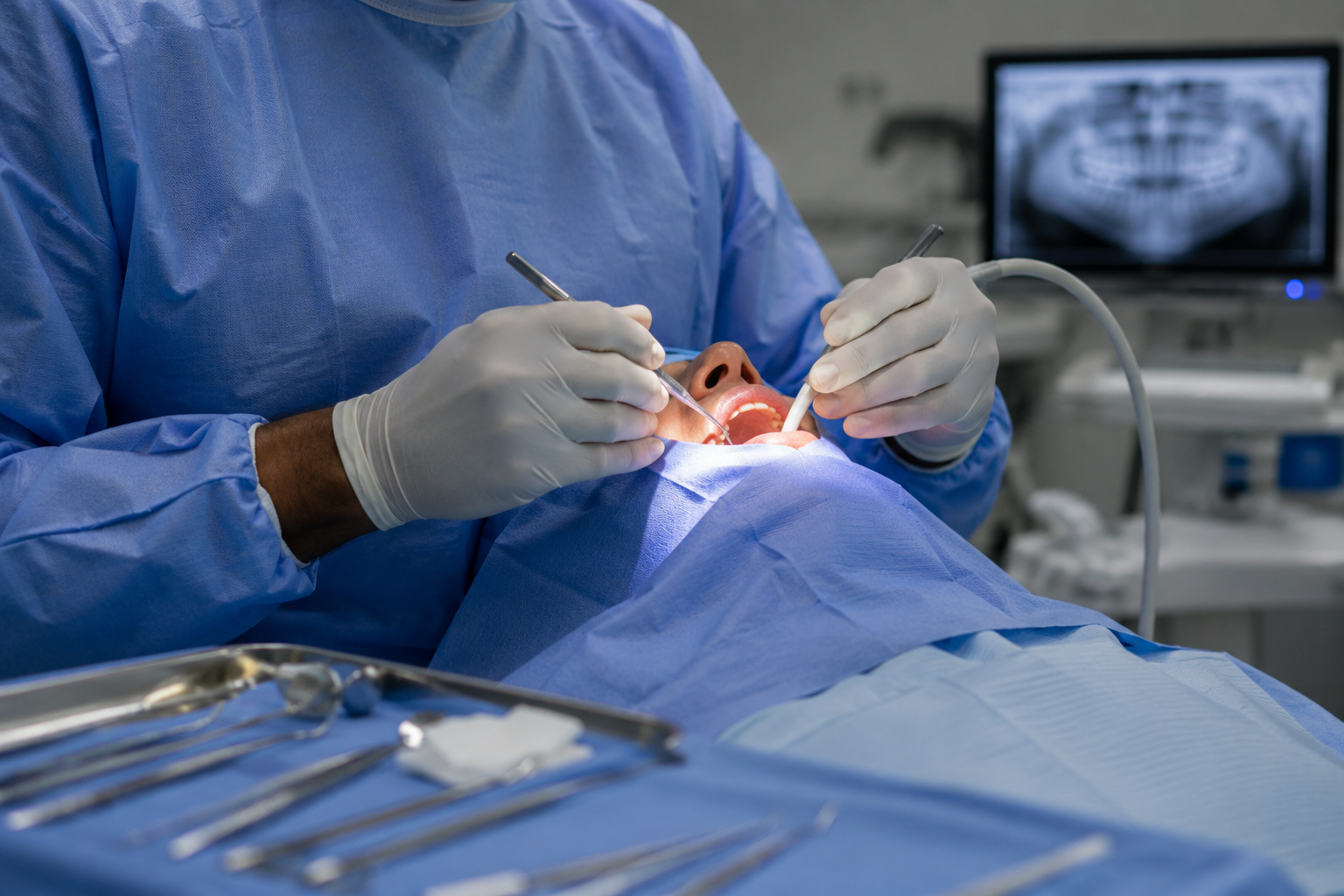
- Surgical Procedure – Precise reshaping, recontouring, or augmentation of bone and tissue under anesthesia, performed with care to minimize trauma and support healing.
- Recovery and Tissue Maturation – Healing tissues are monitored over several weeks as the ridge and soft tissues mature into their final stable form.
- Prosthetic Coordination – Once healing is confirmed, we communicate with your restorative team so your final prosthetic can be fabricated or delivered at the optimal time.
Reserve your consultation to begin building the right foundation for your prosthetic success.
Frequently asked questions
How long after preprosthetic surgery can I receive my denture?
Timing varies by procedure. Minor tissue recontouring may allow prosthetic delivery within a few weeks, while bone reshaping typically requires four to eight weeks of healing before the ridge stabilizes. We coordinate the timing directly with your restorative provider so your denture is fabricated at exactly the right stage of healing for the most accurate fit.
Will preprosthetic surgery change how my face looks?
Procedures such as alveoloplasty and tori removal are localized to the oral structures and do not change your facial appearance. Ridge augmentation may actually improve facial support by restoring lost bone volume, which can have a subtle positive effect on facial contour in patients with significant long-term bone loss.
Is the procedure painful?
Preprosthetic procedures are performed under local anesthesia with sedation options available for added comfort. During the procedure you should feel no pain. Post-operative discomfort is typically mild to moderate and well-managed with prescribed or over-the-counter pain medications as directed by our team.
How long does recovery from alveoloplasty or tori removal take?
Most patients are comfortable within one to two weeks and resume normal activities soon after. Full tissue maturation and ridge stabilization typically takes four to eight weeks. We will guide you through each stage and let you know exactly when you are ready for the next step.
Does insurance cover preprosthetic surgery?
Many dental insurance plans provide partial coverage for preprosthetic procedures when they are deemed necessary for prosthetic placement. We verify your benefits before your appointment at no charge to you and provide a transparent cost breakdown so you can plan accordingly.
Can I have preprosthetic surgery and implants at the same time?
In some cases, yes. Bone grafting for ridge augmentation and implant preparation can often be coordinated as part of a single comprehensive surgical plan. We discuss the sequencing and timing of all procedures during your consultation to create the most efficient and clinically appropriate path to your final result.
READY TO BUILD THE BEST FOUNDATION FOR YOUR SMILE?
Don’t settle for a prosthetic that doesn’t fit as well as it should. Reserve your preprosthetic surgery consultation at Saxira Oral Surgery today and let us set the stage for lasting comfort, function, and confidence.
Look your best. Feel your best. Be your best.
This isn’t just preparation. It’s the foundation of your best smile.
Individual results may vary. Preprosthetic surgery outcomes depend on the nature of the condition, personal healing factors, and coordination with the planned prosthetic. Schedule a consultation for a complete, personalized surgical and prosthetic assessment.